The Most Exciting of News: I’m Published

My book is available on Amazon! After beginning The Equinox Chronicles series almost a year and a half ago, I have finally finished editing the first book, and it is now available in the Amazon Kindle Store. It is called Season of Shadow, and it is a young adult urban fantasy, although it will appeal to anyone who likes mythology or Southern lit with a bit of the macabre thrown in. I will post a much lengthier discussion of this process later, but for now, I wanted to share my happiness with this announcement.

You can check out Season of Shadow here. I’m so eager to be able to share this with you all, and I hope you enjoy reading it as much as I enjoyed creating it and living almost exclusively within its pages for some months now.

More details to come soon!

I know I’m beautiful, so deal with it

“You don’t know you’re beautiful. But that’s what makes you beautiful.”

BULLSHIT. Could I be rolling my eyes any harder?

Today’s rant is about why our culture seems to think it’s so bad for a woman to know that she is beautiful and to be confident in that beauty. I’ve been reading a couple YA books lately, all of which I’m thoroughly enjoying, but one thing that gets on my nerves to no end is that almost all of the teenage female protagonists are insecure about the way they look, but they feel beautiful when their significant other tells them that they are beautiful.

Now I’ll be the first to admit that this is how most teenage girls feel; it’s certainly how I felt as a teenager: insecure, unattractive, tubby, gross, unlovable. That’s largely part and parcel of being a teenage girl. However. That doesn’t mean that our characters have to share all of those traits with us. Sure, characters aren’t supposed to be perfect, but why is feeling insecure/unattractive always the go-to imperfect trait in fictional teenage girls? What about rage? Oh that’s right, anger is unfeminine if allowed to go past a certain point. What about gossip? Oh that’s right, that would make her a bitch. What about being bossy? Oh that’s right, that would also make her a bitch.

Obviously I don’t think being prone to gossip or being take-charge or losing one’s temper makes one a bitch. But I don’t think I’m too off the mark to say that our society does. After all, would this Beyoncé GIF be quite so powerful and amazing if it wasn’t also something we’re not used to seeing?

We shouldn’t be surprised by this, but part of its power comes from its being unexpected. A woman in charge (of anything) should be just “the boss”- she shouldn’t have to explain herself or worry about others perceiving her as “bossy” or “bitchy.” But she does.

Characters should above all be honest, but what I can’t stand to see is when a girl feels beautiful only when someone else tells her she is beautiful (usually this is spoken by a teenage boy, because God forbid another girl tell her she’s pretty in more than a “oh no girl, you’re like so pretty, I can’t believe he didn’t call you” way). One, until a girl or woman feels beautiful for herself and by herself, it doesn’t matter how many other people (friends, family, significant others) tell her she is. No right combination of words will make her truly believe it until this knowledge is internalized and she knows it to be true on her own. Two, that doesn’t mean you should stop telling women in your life that they’re beautiful; definitely keep doing that, but understand that you don’t get to decide what makes her feel beautiful. Whether she feels beautiful wearing makeup or none at all, dressing up or not at all, etc, etc- that’s her decision.

Three (and back to the One Direction song lyrics I started with), what the hell is wrong with a woman actually KNOWING she’s beautiful? That is some leftover patriarchal bullshit that has no place in today’s world. I could easily paraphrase the lyrics so they read: “You’re only sexy because you don’t know how pretty you are, so let me tell you how beautiful you are so I can define your beauty for you and you will subsequently want to sleep with me.” Or equally as valid: “Damn girl, if you knew how fine you were, you wouldn’t be nearly as sexy. Also I probably wouldn’t have a chance in hell with you because you’d be so confident and badass.”

People always say that confidence is one of the most attractive things in a man. The same should be true for a woman. A woman who is confident in herself, who knows she’s beautiful- this same woman is often labeled “vain” or “shallow” or worse, a “bitch” because her standards are too high and she has too much self-worth to sleep with you in order to validate herself.

Your standards don’t define me. I’m beautiful, bitches.

Freak Out with my Geek Out

I’m going to seriously nerd it up today, but it’s something I’ve been thinking about a lot lately, namely why our language is constructed the way it is.

Still with me? Huzzah! Okay, so I’ve been teaching myself Irish Gaelic for the past few months, and one of the most striking things about this language is that the verb always comes before the subject. So for example, in English, we would say, “The dog ran home.” In Irish Gaelic, the literal translation would be “Ran the dog home.” The English word order is known in linguistics as Subject-Verb-Object (abbreviated SVO); the Irish word order is know as Verb-Subject-Object (abbreviated VSO).

And because I’m not content to just know about the difference in sentence construction, I went about some research to figure out why some languages are constructed SVO and some VSO. In English, the focus is on the subject of the sentence. In other words, the subject (who performs the action) seems to be key (and dare we say most important?). In Irish, the focus seems to be instead on the verb of the sentence. In other words, the verb (the action being performed) seems to be key (and dare we say most important?).

Now before I go all-out geek, I’ll rein myself in to say first, which word order predominates in other world languages, and second, what I think these differences in construction mean.

First, there’s a good bit of linguistic research on all this, but the consensus seems to be that all humans had a common language once upon a long-ass time ago, and the word order of sentences in that language was most likely SOV. Example: “The boy the bear shot” is SOV, as opposed to “Shot the boy the bear” (VSO) or “The boy shot the bear” (SVO). Then eventually, people split off from each other and language evolved, and some languages kept the SOV word order, while some morphed into SVO, others into VSO, and even other constructions which aren’t terribly relevant to this post.

So many years passed and BAM! we have around 6500 languages in the world today. The SVO constructed languages have the most speakers in the world (examples: English, French, Mandarin Chinese, crazy lots of others). The second most common is SOV, and the third most common is VSO. Examples of VSO languages include the Celtic languages like Irish, as well as Classical/Biblical Hebrew and Arabic.

So why do some languages seem most concerned with the action being performed, and some with the person or thing performing that action? Full disclosure: The following conclusions are neither scientific nor scholarly, just some semi-educated guesses by someone who hasn’t fully done all her research yet:

Maybe- just maybe- some societies historically have been more concerned with something being done than with who does it.

Now in light of the recent “Blurred Lines” controversy, I think it’s safe to say that American society today seems inordinately preoccupied with who has done something. Sure, we all want credit when we’re brilliant (I’m no exception myself), but what’s ultimately going to last? Our names and the details of our lives, or our works and the feelings they inspire?

How many people still know anything about Michelangelo (other than that he was a famous artist)? How many people know who wrote the Beowulf epic (hint: no one)? But how many people have seen the ceiling of the Sistine Chapel since its creation and been inspired, or felt awe, or felt somehow profoundly connected to someone or something greater? And how can we ever fully measure the tremendous impact that Beowulf had on countless subsequent poems, epics, novels, plays, films, etc?

Learning Irish Gaelic has made me think about all this and wonder what our society would be like if English word order was VSO, focused on the verb of each sentence rather than the subject. In what ways might it change our culture, or would it even change at all? Perhaps the glorification of the individual was always inevitable in our society, and not something rooted in our very language. Then again, perhaps not.

I Fear for the Fucking Future: Let’s Talk about Clean Reader

So maybe I’m late to the party (it wouldn’t be the first time), but just this week, I heard about this app called Clean Reader. Basically, what it does is take a book and search it for any words that might be offensive. It then replaces them with euphemistic alternatives. For example, if a book contains the word “fucking,” Clean Reader will replace it with something like “freaking.”

This program was started by a couple from Idaho who didn’t want their child to be reading offensive language, so they decided to substitute it out and simply use what words they find acceptable, instead of what words the author deemed necessary.

To give you a more thorough breakdown of what words get substituted out (and with what), here’s a lovely description from The Guardian:

“Profanities such as “fucking” and “fucker” became “freaking” and “idiot”, “hell” became “heck” and “shit” became “crap”, according to an analysis of the app by Jennifer Porter. It was not only swear words that Clean Reader scrubbed out of books: Porter, who ran a series of romance novels through the app, found that body parts were also replaced. “Penis” became “groin”, “vagina” was swapped for “bottom” and “breast” changed to “chest”. Exclamations such as “Jesus Christ” became “geez”, “piss” became “pee”, “bitch” became “witch” and “blowjob” was switched with the euphemistic “pleasure”.”

Unsurprisingly, this bothers me on many levels.

First, it bothers me as a reader. When I read a book by a certain author, I expect the words I’m reading to have been composed and approved by that self-same author. I assume that whatever words they chose, they had a reason for, and if someone’s writing style or language choice is not up my alley, then I simply don’t read the bloody book.

It also bothers me as a reader because, in the quest to clean up an author’s language, some fascinating substitutions (and by fascinating, I mean terrible) are made. For example, Clean Reader assumes that someone using the words “Jesus Christ” must be using it in an offensive way, so it will block it. And apparently, the app even looks for words like “lick” and “cock” – lots of things can be licked and it not be offensive, and what if a rooster is crowing in your character’s backyard and they want to talk about it?

Let’s say we take this method and apply it to a literary classic such as The Adventures of Huckleberry Finn by Mark Twain. If we used an app like Clean Reader to “squeaky-clean” it up, what would be the end result? Besides the language now being different, we’d also face the problem of a book not being true to the time in which it was written, much less to the characters about which it was written. That doesn’t mean this language is not offensive, because most certainly it is. But a great part of the power of Huck Finn comes from this very offensiveness.

Second of all, Clean Reader bothers me as a writer. When I write, I choose my language- my words- very carefully and very precisely. And I don’t take kindly to the idea that someone can (without even reading my book first) go in and essentially mark out whatever language I have found important and essential, just because they find the words offensive. You are welcome to not read my books if the language offends you, but I don’t think that gives you the right to censor my words and replace them with words that you think are “good.”

Which leads us to the point of what is a good versus a bad word anyway. Who has decided that one word, such as “bitch” is any more or less offensive than a word such as “witch”? Historically speaking, I’m pretty sure “witch” has much worse connotations of stake-burnings and hangings and devil-worship and what-not. And by the way, in no universe does “bottom” mean the same thing as “vagina” – not to mention the fact that vagina is just an anatomical word.

Now of course there are some words that you don’t say in polite society, unless you just give zero fucks. However, that doesn’t mean that you get to go in to something that I have created, that I have worked hard to produce, and say “that’s not good language, this is what good language looks like, and I’m going to arbitrarily impose these standards on you.” And if they can do this with single words, what’s to stop someone from rewriting entire scenes that they find offensive? What if someone writes over a sex scene with a scene where the characters hold hands and just fall asleep instead? What if someone decides that the mere existence of an LGBT character is offensive, so all references to that character’s sexuality and romantic interests, etc, are simply erased- or even worse, replaced to make the character straight?

In my own writing, I don’t use a whole lot of what others may deem “unacceptable” language. There are generally a few well-placed words here and there when it’s necessary, but believe you me, it is sometimes most certainly necessary. For example, in one of the key scenes in my most recent book, my main character uses a word that I never use in my personal life. I had a good bit of debate with myself over whether this word was truly necessary. The more I thought about it, however, the more I recognized that it was essential. Just because I wouldn’t use the word in my personal life, doesn’t mean this character wouldn’t use it in hers. In fact, quite the opposite.

Now I also think because my pages don’t happen to be littered with “unsavory” words, that when I did find it necessary to use this word, it made it that much more powerful and impactful. So while I may not care for books where every other word is of the four-letter variety or some creative variation thereof, I recognize that no one is forcing me to read those books.

As a final illustration of my point, let’s think back to the film Gone with the Wind. If in the closing scene, Rhett Butler had told Scarlett, “Frankly, my dear, I don’t give a darn,” is there anyone who thinks it would have had nearly the same impact as when he actually said, “Frankly, my dear, I don’t give a damn”?

That’s it for this week. May your tales be bawdy, and your language be your own.

On the Vulnerability of the Artist

A few days ago, I read an article discussing how once a book is released into the world, it is no longer the author’s. It becomes subject to critics and readers, who make their own judgments and assumptions about the text. And while this is often remarkably exciting for the author, it is also often destructive and painful when that response is not all that we hope it will be.

With an upcoming book release looming in the back of my mind, this has been often in the forefront of my thoughts. Because writing is quite frequently one (or the only) thing I feel confident about in my life (don’t worry, this post will not turn into a therapy session discussing the ins and outs and all-arounds of that Pandora’s box), it’s a remarkably vulnerable and naked feeling to be preparing to send my work out into the world and hope people see in it the same beauty and pain and excitement that I do.

Letting other people read my writing always makes me feel a bit like this.

But such is the artist’s life, right? As badly as I want to share these worlds I have created with other people, because I want other people to love them as much as I do, I also know that in opening up myself and my self-created worlds, I open them to all readers and all comments: good, negative, indifferent, and even cruel. This is nothing new in the history of the world I’m facing, I’m well aware, but that doesn’t change the fact that it’s terrifying to be that vulnerable– with complete strangers you may never meet as much as with your own family members.

Because as much as I want to share these amazing characters that I have gotten to know and love as I’ve been writing them, there’s also a part of me that wants so badly to protect them from any kind of negative reception (no one can please everybody, or so I’ve heard). And let’s be honest, I’m also quite interested in protecting myself from hurtful comments, especially when it seems increasingly easy to bash someone’s life work in a review from behind a computer screen without a second thought.

The other twist in Signs: Joaquin Phoenix is a writer who just read a scathing review of his latest novel.

But then, right on time, I read this quote from Madeleine L’Engle: “When we were children, we used to think that when we were grown-up we would no longer be vulnerable. But to grow up is to accept vulnerability… To be alive is to be vulnerable.” To which I can only say:

The Rock needs no explanation.

Wise woman, that. It’s worth the risk to share and be vulnerable with another human being. It has to be, or else what’s the point of all this anyway?

Blurred Lines between Inspiration and Infringement

It’s a bad day for artistic creativity and expression.

A jury has found Pharrell Williams and Robin Thicke guilty of plagiarizing Marvin Gaye’s “Got to Give it Up” in their song “Blurred Lines.” I find this not only appalling, but frightening as well. Copyright is important, let’s not have any confusion about that, but what I would argue is even more important is creativity.

An artwork of any medium (musical, lyrical, visual, written, etc) is utterly interdependent on other artwork. If we take even the briefest of looks at history, it doesn’t take long to figure out that artistic movements occur in reaction to each other. One poetic movement grows out of a previous one, another poetic movement arises as a response to and a reaction against that previous one. The same is true for music and sculpture and visual art.

So for the sake of argument, let’s say there is some similarity between these two songs; whether you want to say that similarity is a bass line, the beat, a mood/tone, whatever, is up to you. Is “Blurred Lines” so similar to “Got to Give it Up” that it should be accused of plagiarism rather than simply artistic inspiration? And it’s not about the money that Williams and Thicke will have to pay up for this supposed infringement; it’s about the bloody principle of the thing. What is the line between inspiration and infringement? Or between sharing and stealing creativity? Of course sometimes people outright steal creative works from other people, and that is beyond terrible. But I think what happens far more– and what should be allowed to continue to happen– is that artists are inspired by other artists. They “take something [they] love and build on it.” That quote is from a TED Radio Hour excerpt, which you can listen to here:

http://www.npr.org/2014/06/27/322721353/why-would-more-than-500-artists-sample-the-same-song 

This is the short version of the TED Radio Hour with Mark Ronson, on “What is Original?” and is pretty much all the proof you need. To put it briefly, Ronson explains how Slick Rick and Doug E. Fresh’s “La Di Da Di” is a foundational song, from which a number of artists took inspiration, including: Beastie Boys, Miley Cyrus, Snoop Dogg, The Notorious B.I.G., Beyoncé, Kanye West, and plenty of others. In other words, to quote Picasso, “Good artists copy, great artists steal.”

Velazquez’s Las Meninas

And a Picasso version of Las Meninas, inspired by Velazquez’s work

There are no original ideas. I feel like that’s a pretty well-established fact. There are unique spins, new combinations, etc, but no one’s going to reinvent the wheel. The wheel exists, and we just put our own spins on it (see what I did there?). So when you have a musician like Taylor Swift try to copyright some phrases from her lyrics including “this sick beat” and “party like it’s 1989,” we run into a real problem.

Manet’s Olympia….

…. Inspired by Titian’s Venus of Urbino

There are many great things about the primacy of the individual in our society. This court finding, however, is an example of its dark side. We are so concerned with our individual thoughts and ideas and work that first off, we fail to acknowledge how dependent we are on the artists and thinkers who came before us, and how we couldn’t have come up with any of the thoughts and creative works that we have without those who paved the way, and they could not have come up with anything without the work of those generations before them, and so on and on. And secondly, we fail to share in the community of creativity where others can inspire us, and where we can inspire others to pass on this deeply human drive and desire to create.

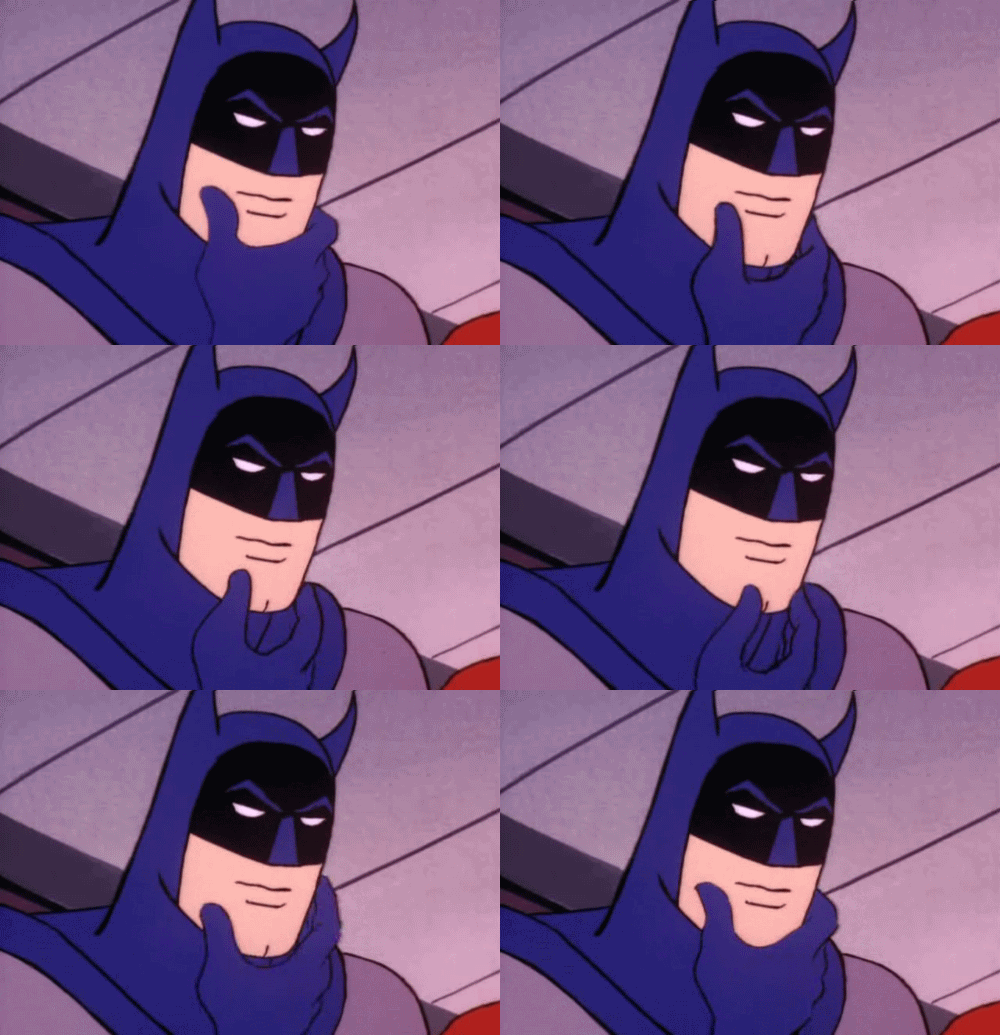
Wait up, let me just grab my confidence heels

Wait up, let me just grab my confidence heels

So if you follow me on Twitter @BronwenCarlyle, you’ll probably have already read this story more times than you care to, but I promise I’ll say something about it more than “ermigerd I met a celebrity.” Yesterday when I was flying home to visit my family, I ran into the hockey player Robert Bortuzzo, formerly a Pittsburgh Penguin who just got traded away to St. Louis, which in my opinion is a great loss and a terrible decision for Pittsburgh. But anyway, I happened to share a brief plane ride with him and also managed to snag a picture as proof, since otherwise no one would ever have believed me.

me and bortuzzo

But rather than me gushing on like a giddy schoolgirl (which let’s face it, is how I acted because I was so starstruck), I want to instead talk about confidence and personal appearance and Murphy’s bloody Law.

Very rarely do I leave the house with no makeup on. There are many reasons for that. One, I just like makeup. I enjoy putting it on and I enjoy the way it makes me look and feel. Two, I always feel much more confident when wearing makeup. If I have on a pair of heels and some red lipstick, there is nothing I can’t do. And finally number three, it never fails that if I leave the house without makeup on or just wearing sweatpants and a T-shirt (which I almost never wear out because in the same way that I love lipstick and heels, I also love dresses and jewelry), I will inevitably run into someone I know and someone before whom I would prefer not to be wearing ratty old sweatpants.

So of course when I ran into the NHL hockey player in the airport, I was wearing “airport clothes” or “I’m-tired-and-dehydrated-and-just-want-to-get-home-clothes” and had no makeup on. Which I’ll be honest is why it’s me it took me an entire flight plus ten minutes of deboarding the plane to work up my courage to run up to him and tell him how much I love him and think he is an amazing player and I’m a huge fan and would he take a picture with me. I have a feeling that if I had been wearing lipstick and heels per usual, it would’ve taken me about two minutes to work up my nerve to do all this.

The point of all this is to say that while I love being dressed up, I certainly should not have to be all dressed up to have confidence. When I was relating this story to my best friend, she was quick to point out that even when I’m not wearing my confidence heels, I basically always am. I guess it’s just hard to remember that all the time.

How I generally feel when I’m wearing heels and lipstick

How I generally feel without my makeup armor

The point of all this is to say-well, many things- but thinking especially in terms of my writing, I find myself often wanting to be more like (some) of the characters I create. Thinking of my female characters alone, they are all wearing confidence heels even when they’re not. Even when they’re terrified or insecure or overwhelmed, they have the ability (even if they don’t always use it) to tap into some deep power. Now I don’t want to go all “I am woman hear me roar” but: Rawr.

My female characters are by far my most powerful. And it doesn’t matter if they are wearing sweatshirts or ballgowns or tiaras or sneakers, they are powerful simply because they are powerful. Sometimes it takes a while for them to realize this power but even then, that doesn’t mean they have to change their appearance in any way to look more traditionally feminine (whatever that means, that’s so culturally loaded).

the ever-wise Dita Von Teese again

They are powerful because they believe they are powerful. Here’s to hoping I can learn something from my own creations.

We Need Angry Heroines

This past week, I was looking for clips of a woman throwing something through a window or flipping a table– really anything that was an outward demonstration of anger by someone other than Alan Rickman:

However, before even looking through the abundance of clips/gifs/what-have-you’s, these are the first five searches that Google tried to automatically fill in for me when I typed in “woman breaking…”

1. “woman breaking things with her breast”
2. “woman breaking chains”
3. “woman breaking watermelon with thighs”
4. “woman breaking through the glass ceiling”
5. “woman breaking stuff with her breast”

Yes, that last one is on there twice. Apparently “stuff” and “things” constitute different matter. While this list is so bad it’s funny, it’s also appalling. I’m certainly not advocating that throwing things or breaking windows is the best and healthiest expression of anger (though come on, you know it’s satisfying), BUT this search result points to a bigger problem. To clarify, let me give you the top five Google search automatic fill-ins for “man breaking…”

1. “man breaking into the white house”
2. “man breaking sound barrier”
3. “man breaking chains”
4. “man breaking golf clubs”
5. “man breaking through door”

Let’s recap. If a woman is breaking something, it must have something to do with her breasts or thighs– any body part that can be separated from the woman as a whole and objectified. Or it has to do with not being able to rise at work above a certain level. Or chains, apparently.

If a man is breaking something, he must be actively doing something- whether that’s running into the White House, performing great feats to break the sound barrier, or beating the shit out of a door or golf clubs. Or chains, apparently.

When I finally did search for any number of gifs with a woman having an outward expression of anger, let me just say that there were slim pickings. Now sure, there are healthier ways of dealing with anger than flipping a table, but I think this just goes to show that just as men are generally taught that crying is only for girls, women are generally taught that getting demonstrably mad is only for men. Maybe nobody sits them down and tells them this, but at least in my experience (though I know this isn’t always the case), if a man flips a table, he’s just an angry man. If a woman flips a table, she must be a crazy bitch.

From Silver Linings Playbook

I know a lot of women stuff their emotions and bottle them up to keep from being called a crazy bitch (or some variation thereof), but I think we all know how successful that generally is. I may be reaching here, but let’s not forget that there’s an entire show called “Snapped” dedicated to women who have murdered or attempted to murder someone- usually their spouses.

The point of all this is to say that, it’s okay for a woman to be angry. There’s a lot to be angry about in the world. Obviously that anger should never be used to hurt anyone, but anger channeled in good ways can accomplish a lot, and the world is in desperate need of angry heroines.

When I’m writing, I try to create heroines who are both angry and express their anger without being ridiculed or stigmatized or clichéd. There are far too many girls and women in literature who stamp their feet, or put their hands on their hips and glare, or simply swallow their anger. I want my heroines (both the ones I read and write about) to be powerful, and when all a heroine is allowed to do is stamp her feet, it trivializes her actions and all she can accomplish. I want my heroines to be powerful in their anger.

I want them to stir some shit up.

Also from Silver Linings Playbook

Plunging into Social Media

The last few months, I’ve been wrestling with the decision of how to publish – as well as finishing the current series I’m working on. After much thinking and as many cups of coffee as sleepless nights, I have decided to publish myself. There are a lot of reasons for this, but the main one is that I just want people to read it. I’m not out to become a bestselling author with a summer home here and a fall retreat cabin there. I just want to write books that make me happy, and hope that they may make some other people happy as well.

Note to the universe if it’s listening: not that I would mind a summer home and a fall cabin- that’s just not my goal here.

So, in the grand quest to publish myself, there’s also a million subcategories within self-publishing (that may be an ever so slight over-exaggeration). After looking over all my options, I have decided, however, to go with e-book publishing through Amazon.

At some point you have to choose something, or so they tell me.

At some point you have to choose something, or so they tell me.

Which leads me to the point of today’s post: in addition to teaching by day to pay (some) bills, I am embarking on a rather intense editing journey to get my first urban fantasy book (in a series of four) ready to go. And because I’m nothing if not ambitious, I have also FINALLY (I know, I know) created myself a Twitter. I shall therefore endeavor to keep myself plugged into the world rather than hiding away in my igloo oasis of snow.

It’s time for this little introvert to fly. Or at the very least, jump the hell out of the nest and see what happens.

nest

Of Introverts and Explanations

Okay, so obviously my grand plans to post regularly, following my initial brief hiatus, rather fell through. Since the initial purpose of my blog was to help me muddle through my decision making about whether to stay in or leave my PhD program, and that decision has long since been made, I’ve been muddling since then through what I’d like to actually post about. So, forget consistent themes, and enter random thoughts.

Even though today is Saturday, the one day when I try to sleep in, I woke up early today. And why? So I could spend the day gloriously alone. Shout out to all my fellow introverts.

I’ve been bouncing around for the past few months, crashing with various people in various places because (quite frankly) I can, and why not take advantage of that at the moment. However, that has also made it impossible to have more than a few hours of time purely to myself. Whenever I take the Myers-Briggs personality test, I always max out the introvert scale. A few hours alone is not enough for this girl, nor is a full day by myself at a library or coffeeshop. If there is another person in sight, I am unable to fully unwind.

I’m not anti-social, just selectively social. Being an introvert also doesn’t mean I’m painfully shy or despise people, parties, and being public in general.  But for those of you who don’t understand what introverts are all about, and since there is a lot of misinformation about us circling around the great interwebs, let me give you a helpful list, which may or may not apply in different degrees to other introverts. Being an introvert, for me, means:

1. Just because I will happily talk to the people around me in a check-out line for the two minutes we’re waiting, does not mean I also want to talk to my hairdresser for the entire thirty-plus minutes I’m in her chair.

introvert4

2. I am just as excited about an entire week of vacation where I get to stay at home and not leave the house once (because I had enough foresight to buy groceries and all possible emergency supplies the week before), as I am about a vacation to the UK.

introvert5

3. If you make any sort of comment about how reserved, quiet, or shy I must be, this is my reaction:

introvert1

4. If I have to go more than one week without a day entirely to myself, I get irrationally angry.

introvert2

5. If I have been quiet for a while in a group but then decide to say something, and your reaction is to say, “Oh look, it speaks,” guess how amusing I think that is.

introvert3

6. Okay, so five seems like more than an adequate number of things to describe my introversion. Therefore, I’m done. Now if you’ll excuse me, I am very busy being alone and listening to my own thoughts today. Hannah, out.